|
Camp Atterbury |
|||
|
Federal Authority |
|||
|
|
1
Colonel Welton M. Modisette First Commander of Camp Atterbury, activated and commanded Camp Atterbury through bulk of World War II
|
||
 |
2 Brigadier General (Brevet) Ernest A. Bixby Post Commander during the period Camp Atterbury was the US Army's Midwestern "World War II Separation Center". Over 550,000 Army Soldiers returned to civilian life through here. |
||
| In the final months of World War II, officers were assigned and Camp Commander for short periods of time. |
3 Colonel Herbert K. Glidden 08 June 1946 - 15 August 1946 4
Colonel John L. Grammell 5
Colonal Carter R. McLennan Had been a prisoner of War of the Japanese for three and a half years. He was a member of Lt. Gen. Jonathan M. Wainwright's staff at the surrender of Corregidor and Bataan in May 1942. |
||
|
Camp Atterbury was officially deactivated 31 December 1946. Commanders/Caretakers were in charge of the Post during this period. |
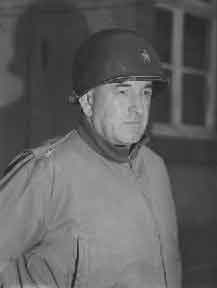
6 Colonel Shuvey E. Wolfe 02 April 1947 - 01 December 1947 7
Major Millard Saul (Interim) 8
Colonel Ernest A. Kindervater |
||
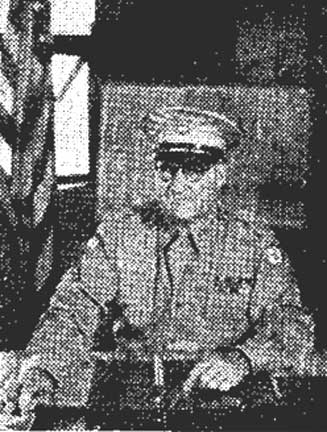 |
9
Colonel James A. Murphey |
||
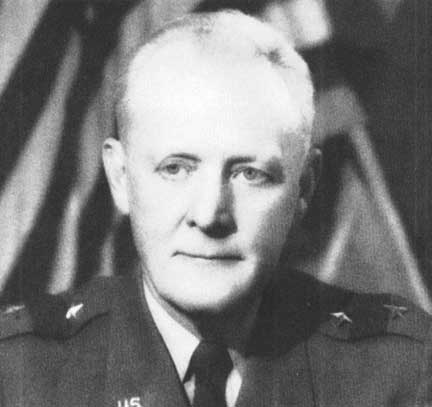 |
10
Major General Withers A.
Buress |
||
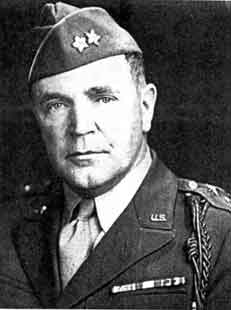 |
11
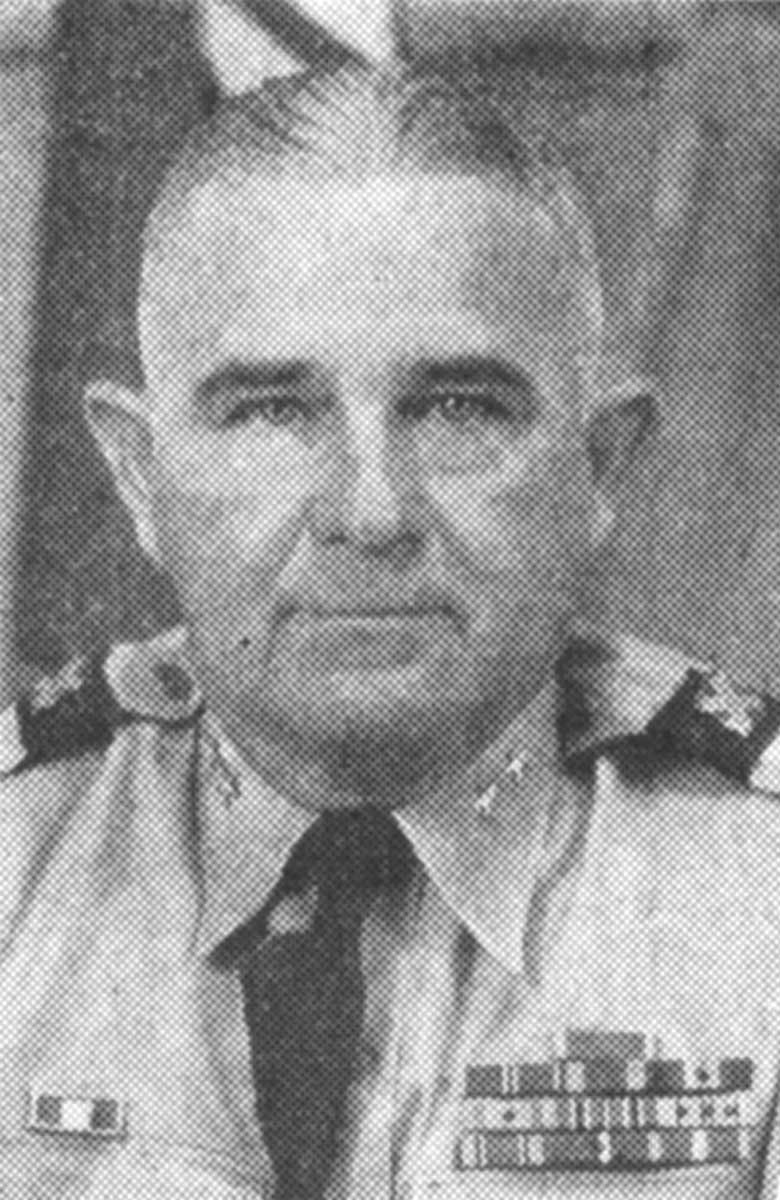
General Paul W. Kendal I Corps Commander, December, 1952 Korea
|
||
 |
12
Maj. Gen. Alexander U. Paxton |
||
 |
13
Major General Hobart R. Gay
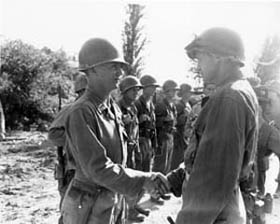
Major General Hobart R. Gay, CG, 1st Cavalry Division, (Korean War) congratulates 2nd Lieutenant Raymond A. Whelan of Mossap, Conn., after awarding him the Silver Star for meritorious services. General Gay was in the automobile with General George Patton when the accident occurred that eventually caused General Patton's death. |
||
 |
14
Major General Ira P. Swift Commander, 33d Armored Regiment February 1951 to July 1951
|
||
 |
15 Major General Harry J. Collins April 1953 to February 1954 |
||
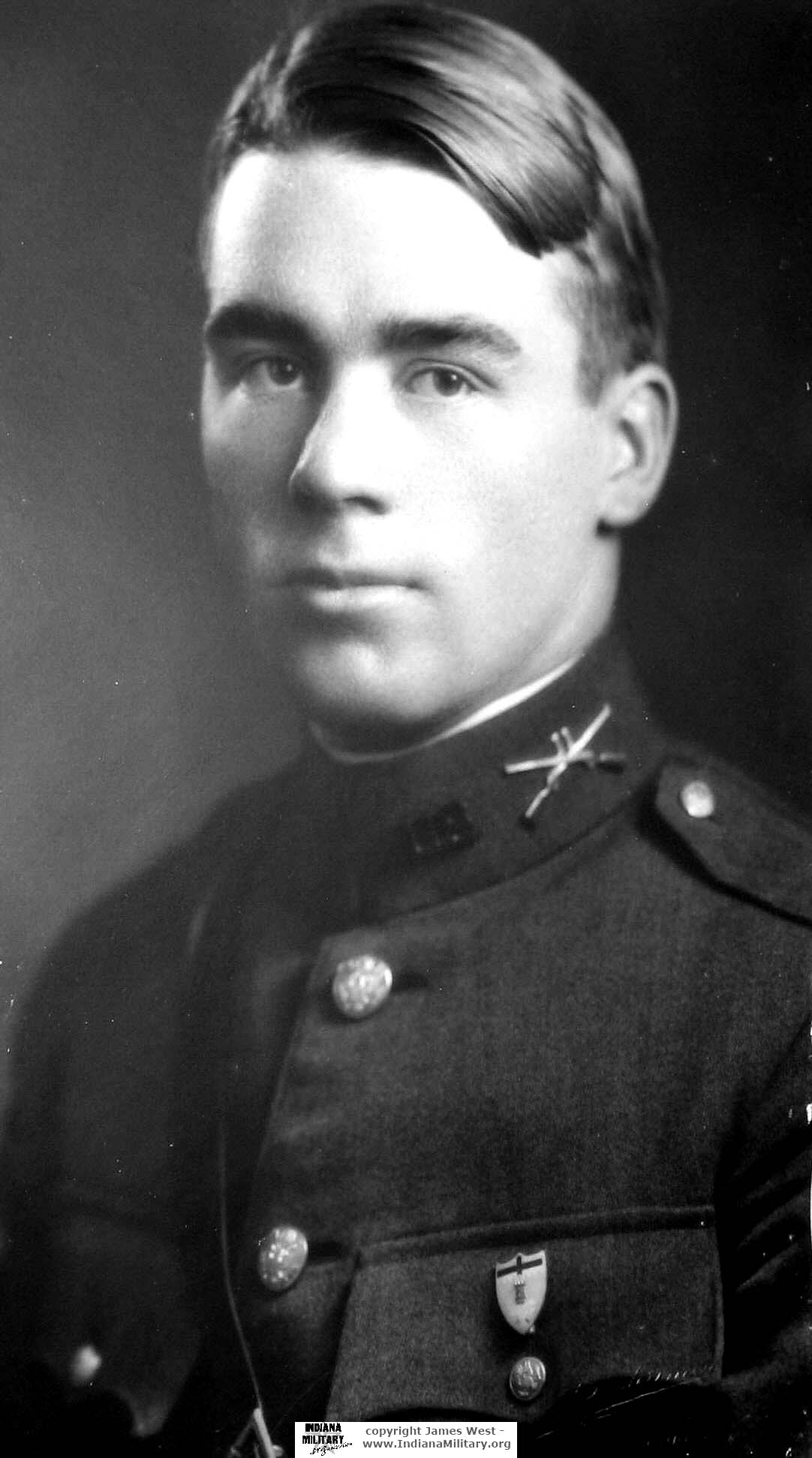
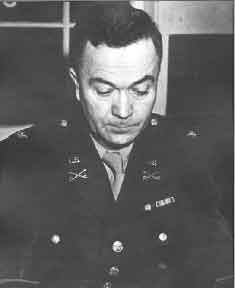
COL Daughtery - 1930 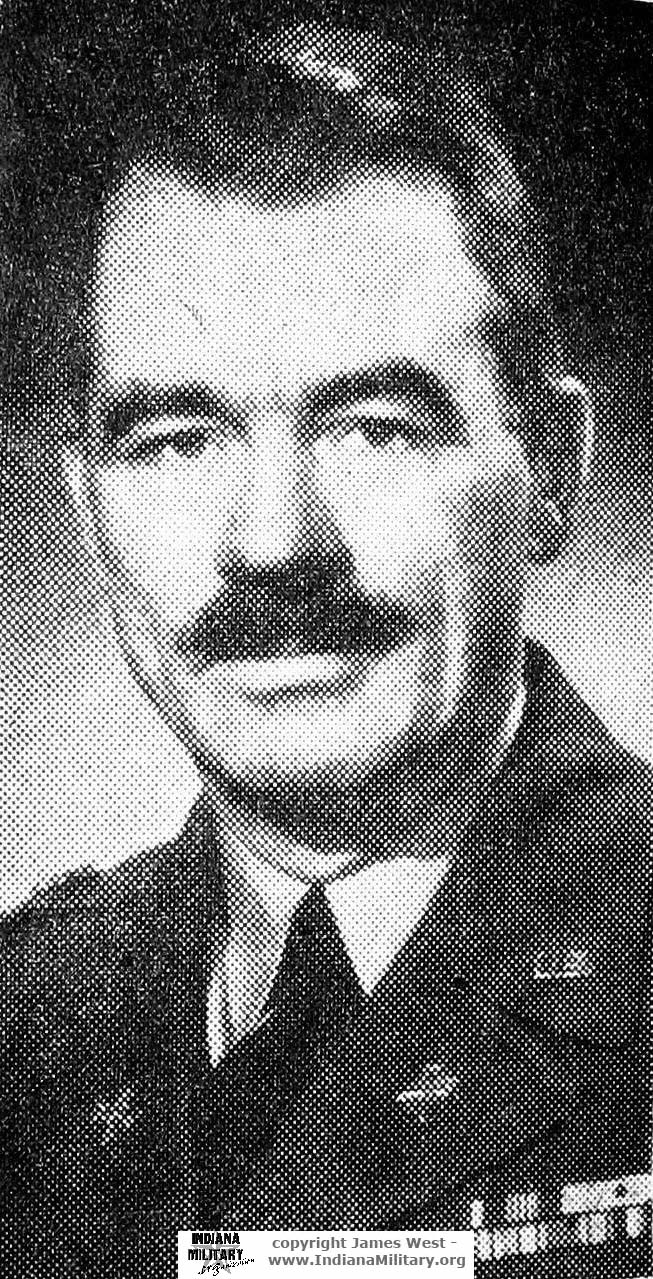 COL Daughtery- 1953 photos courtesy "Curley" Roeder
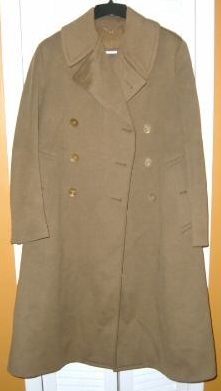
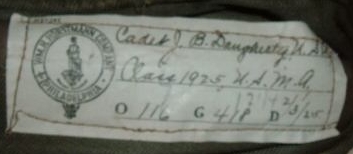
On Ebay, 01/22/2007 - Authentic Cadet Winter coat from West Point- 1925. Manufacturer by the Wm. Horstmann Co., Philadelphia, PA. The owner, COL Joseph Daughtery was the Camp Atterbury Post Commander 1954 to 1955. He was also the Commander of the Quartermaster RTC at Fort Benjamin Harrison. His Father served in the Civil War. |
16 COL Joseph Daughtery Goes to Post in Indiana After staying with the QM RTC right to the end, the organization's last commanding officer, Col. Joseph B. Daughtery, today is packing and ready to leave for his next assignment. Col. Daughtery is scheduled to leave next week for Camp Atterbury, Ind., where he is slated to become deputy post commander. The assignment is right near home for the colonel, who is a native of Indianapolis, 30 miles from the post. However, he says, "It will be the first time near home for me since I left Fort Benjamin Harrison in 1928." However, before Col. Daughtery left Fort Lee, he received a letter from Maj. Gen. H. L. Peckham, commanding general, the Quartermaster Training Command. The letter said, in part: "...I desire to express my appreciation to you and your staff and the members of your cadre for the highly efficient manner in which the QM RTC has been operated, and for the smooth way in which its activities have been discontinued or transferred since mid-July, when the phase-out began. "The Quartermaster Replacement Training Center has trained approximately 31,000 men since it was activated on 25 August 1950 ... "As you and the remaining members of your command close out the residual activities of the QM-RTC, you may take pride in a job 'well done'. "Best wishes to you all in your new assignments." Col. Daughtery graduated from the United States Military Academy in 1925, and since then has served in many posts in the United States. During World War II, he served as Quartermaster Supply Officer of the Atlantic Branch of the Corozal General Depot, and then as Quartermaster Supply Officer of the entire Depot. Before taking command of the QM RTC last Nov. 9, Col. Daughtery had served with the American Military Advisory Group to the Chinese Nationalist forces on Formosa. The colonel wears the Army Commendation Ribbon, the American Defense Ribbon, the American Theater Ribbon, the Yangtze Medal and the World War II Victory Medal. Colonel Joseph B. Daughtery Graduated from West Point class of 1925. Was a military advisory to Chinese Nationalist forces on Formosa in the 1930's. Was Supply Officer in charge of the Atlantic Branch of the Corozal General Depot. His father, William Wirt, was well known, and fought at Gettysburg as a Sergeant. Retired as a Major about 1882. At this time, Major Wirt married 18-year-old Mathilda Anderson. She was believed to be the last living wife of a Civil war veteran. She died at age 85, December 26, 1954 at Fort Benning, Georgia, during the Colonel's command at Camp Atterbury. The Colonel's home town was the Indianapolis north side. He had one brother also a West Point graduate He stayed on at the point as a teacher . He had one sister (?) who married General Joseph H. Harper, Fort Benning, Georgia. |
||
|
17 Lt Colonel Ronald W. Robinson July 1955 to January 1957 Diagnosed as having cancer in late 1957. Ironically, the doctor who first diagnosed his condition was Doctor Lindley L. Gammell of Edinburg, son of Colonel John L. Gammell, who had been commandant of the POW camp at Camp Atterbury throughout the war and Post Commander from August to October 1946. |
|||
|
18 Lt Colonel Alva J. Christopher January 1957 to March 1960 |
|||
|
19 Lt Colonel Harry M. Child March 1960 to April 1961 |
|||
|
20 Lt Colonel James H. Traul April 1961 to April 1963 |
|||
|
21 Lt Col Kenneth R. Welton April 1963 to January 1965 |
|||
|
22 Colonel Harry F. Kinsella January 1965 to November 1966 |
|||
 |
23
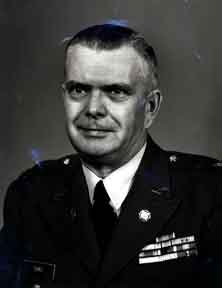
Colonel Charles L. Sims Camp Atterbury was officially licensed to the Indiana National Guard effective 01 January 1969.Colonel Sims was the final Active US Army Commander.
|
||
| Indiana Authority | |||
 |
24
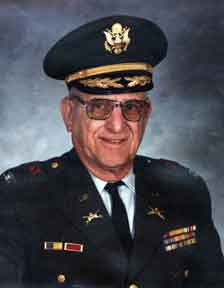
Colonel Richard R. King
|
||
 |
25
Colonel Norman K. Tritch Colonel Tritch was the first National Guard Commander of Camp Atterbury. He commanded the Post as it was re-activated for Reserve Component Training following a long dormant period following the Korean War. Service of Col. Norman K. Tritch, Camp Atterbury, Post Commander from April 1, 1969 to April 5, 1974 Started in the Signal Property Office, Ft. Harrison, Indiana from April 1942 to August 1942 as storekeeper. Joined the U.S. Army in August 14, 1942 with active duty beginning on August 28, 1942. Basic Training and Specialist Training was at Camp Crowder, Missouri from September 1942 to November 1942. Assigned to 843D Signal SVC BN at Ft. Lewis, Washington in November 1942 Placed on Detached service with the Alaska Communication System, Seattle, Washington from December 1942 to February 1943. Reassigned to 843D Signal SVC BN, at Edmonton, Alberta, Canada in February 1943 with duty in Communication Security. Rank � Staff. SGT. Duty assignment changed to Asst. to Cryptographic Security Officer in a travel status. Area covered � Alberta, British Columbia, Yukon Territory, and Northwest Territory. (All in dominion of Canada.) As operations scaled down was transferred back to Edmonton in September 1944. October 1944, broke left leg in 7 places in accident, spent time in U.S. Army Hospital, Edmonton until January 1945. Returned to U.S. (Camp Atterbury, Indiana) for Reassignment, February 1945. Transferred to Camp Butner, North Carolina for Reassignment, March 1945 Reassigned to Camp Crowder, Missouri, March 1945 � Additional Training. Assigned to Tooele Ordnance Depot, Tooele, Utah, April 1945 with Duty as Unit Supply SGT. Released from Active Duty, October 5, 1945 at Tooele Ordnance Depot. Worked for Signal Office, Ft. Harrison, Indiana in October 1945 until June 1947. Joined U.S. Army Reserves,n Indianapolis, March 7, 1947 as S/SGT. Transferred to HQ & HQ Det., Indiana Army National Guard, July 7, 1947 as Private. Promoted to SGT and S/SGT Applied for and Received Direct Commission based on WWII assignments, December 7, 1947. Assignment � Signal Officer Promoted to 1st Lt., December 7, 1948 Promoted to Captain and Major. Transferred to HQ, 1st Brigade, 1963 with duty as S-4. Reassigned to 1st BN, 138th Armor, 1964 with duty as BN Commander Promoted to Lt. Colonel, Armor As part of reorganization of Indiana Army Nation Guard, was reassigned to 738th Maintenance BN as BN Commander in February 1966. Assigned to U.S. Army Command & General Staff College, Ft. Leavenworth, Kansas, January 1967, Graduated May 1967. Returned to 738th Maintenance BN as BN Commander, May 1967. Transferred to HQ CO. 38th Division as Division G4, June 1967 Transferred to HQ, 1413th ENGR DET, CP Atterbury with duty as Post Commander, April 1, 1969 for purpose of organization of Atterbury Reserve Forces Training Area. Promoted to Colonel, April 5, 1969 Retired from Indiana Army National Guard and was transferred to U.S. Army control (U.S. Army Reserves), April 5, 1974. Deceased February 1991. Courtesy of COL Tritch's grandson, Kevin Upshaw |
||
|
|
26
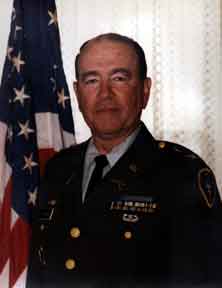
Colonel Richard R. King Colonel King was Post Commander during the most formative period as Camp Atterbury grew from a virtual "cattle ranch" to a very busy, major National Guard training facility.
|
||
 |
27
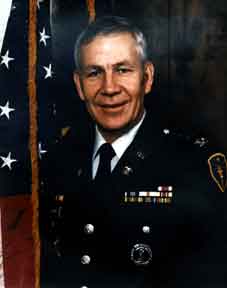
Colonel Clifford M. Brown Colonel Brown was the Post Commander when major new construction was completed at Camp Atterbury. Present Post Headquarters was built and occupied.
|
||
 |
28
Colonel Arthur L. Goldman Post Commander when Camp Atterbury was designated a Major Stand Alone Mobilization Site under US Army Forces Command (Atterbury was previously a sub post of Fort Benjamin Harrison). First Commander of the Camp Atterbury Installation Support Unit formed and activated as the garrison command and control unit effective 19 November 1984. |
||
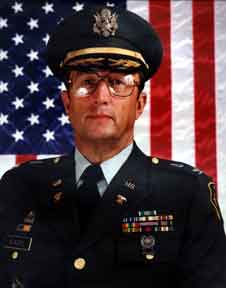 |
29
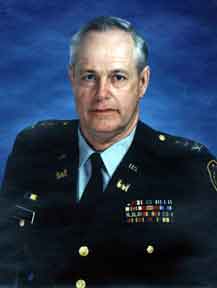
Colonel Jorg Stachel During his tenure, the Post underwent a renaissance period in personnel, training and facility improvements. World War 2 buildings were remodeled, new roads and bridges built, new troop and support facilities were erected and professional Post Management Systems were installed. Post Chapel, WW2 - PW Chapel and the Veterans' Memorial were energized and dedicated during his command. |
||
 |
30
Colonel Garry L. Willis During Col Willis's tenure the installation enjoyed a steady growth in construction and troop usage. The Indiana Military Educational Facility construction project was started as well at Phase VI-B for troop housing. The Post began to excel in the areas of personnel and family services by hosting Youth Services Activities and becoming involved with family and troop sponsored programs. |
||
 |
31
Colonel Jack E. Noel The installation continued to pursue the latest technology for Range and Maintenance construction under Colonel Noel's direction. The Camp Atterbury Museum began construction and utilization of the installation continued to increase with vigorous public relations and marketing approaches. |
||
 |
32
Colonel Charles L. Adams Colonel Adams fulfilled his wish by returning to Camp Atterbury as the Post Commander. Serving in various positions on post during his career has enabled him to continue the vital mission of the Indiana Army National Guard and to continue to serve all armed forces with a through knowledge of the total army mission. |
||
 |
33
Colonel Michael McGowen
Col. Michael P. McGowen, became acting commander of the base in December 1999 and permanent commander in April 2000. McGowen said his biggest achievements as commander were building the
ties between the base and the neighboring communities and overseeing
several new construction projects. |
||
 |
34
Col. Kenneth D. Newlin Colonel Newlin enlisted into the 113th Engineer Battalion in December of 1981. After attaining the rank of Sergeant, he attended Officer Candidate School at the Indiana Military Academy. He was commissioned as a Second Lieutenant on June 6, 1986, graduating first in his class. After serving as a Platoon Leader in both Company C and Company A, 113th Engineer Battalion, he commanded the 1413th Engineer Detachment (Utilities) and the 1313th Engineer Company (Combat Support Equipment). His staff assignments include Construction Engineer Officer; Master Planner; and Facility Engineer, Camp Atterbury; Battalion Operations Officer, 113th Engineer Battalion; and Chief of Construction and Engineering, Military Department of Indiana. His deployments include participation in two REFORGER exercises; JRT Bravo �Fuertes Caminos� in Honduras; TG 416 in Jamaica; TF LeuI in Romania; and numerous deployments with TF 113 to Italy. Colonel Newlin is a graduate of the Engineer Pre Command Course; Command and General Staff Officer�s Course; Combined Arms Staff and Service School; Engineer Officer Advanced Course; and the Engineer Officer Basic Course.
Command Sergeant Command Sergeant Major Gary Hildenbrand has served a long and distinguished career in the Indiana Army National Guard, beginning his career in 1966. Of his total 38 years of service, 21 years have been as a full time technician supporting the Indiana Army National Guard. He served as a Command Sergeant Major at the Battalion, Regiment, Brigade, and Installation level. From 1 October 2002 until his retirement on 31 March 2005, CSM Hildenbrand served as the Installation Command Sergeant Major for Camp Atterbury Joint Maneuver Training Center. |
||
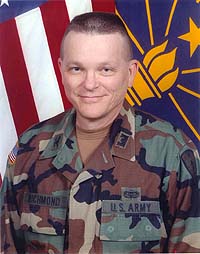
Colonel Barry Richmond Years of Active Commissioned Service: 20 Years as of June �05
Total Years of Service: 25 1/2
Civilian Education Degrees Received High School, Franklin, Indiana Graduated 1969, Indiana Vocational Technical College, Indianapolis, Indiana AS (HVAC Technology) 1982, Oakland City University, Oakland City, Indiana BS (Human Resource Mgmt) 1995, Oakland City University, Oakland City, Indiana MS (Management) 2001
Military Schools Attended Year Completed Basic Training 1971, Leadership Preparation Course 1971, Combat Engineer Advanced Individual Training 1971, Airborne Course 1971, Officer Candidate Course 1982, Engineer Officer Basic Course 1983, Engineer Officer Advanced Course 1991, Battle Focus Instructor Training Course 1994, Small Group Instructor Training Course 1995, Combined Arms Services and Staff School 1995, Command and General Staff College 1997, ARNG Training Center Manager Course 2000, ARNG Strategic Management Course 2001, ARNG Budget Course 2001, Army Force Management School 2002, ARNG Facilitator Course 2002, ARNG Performance Measurement and Practical Application Course 2002, ARNG Practitioner Course 2003, ARNG Army Performance Improvement Criteria Self-Assessment Course 2003, ARNG Army Performance Improvement Criteria Writer�s Course 2003, ARNG Army Performance Improvement Criteria Examiner Course 2003, Army Garrison Pre-Command Course 2005.
U.S. Decorations/Badges Army Meritorious Service Medal, Army Commendation Medal � 2, Army Achievement Medal, Army Reserve Component Achievement Medal � 4, National Defense Service Ribbon � 2, Armed Forces Reserve Medal, Army Service Ribbon, Overseas Service Ribbon, Indiana Long Service Medal � 20 Years Bronze Disk, Indiana Military Volunteer Emblem, Parachute Badge |
35
Colonel Barry Richmond COL Richmond began his military career in 1971, spending three years on active duty with the United States Army. He was trained as a paratrooper, combat engineer, and chaplain assistant. He served with the 173rd Airborne Brigade and 3rd Brigade, 101st Airborne Division in the United States and with the 10th Special Forces Detachment, Bad Toelz, Federal Republic of Germany. He was discharged from active duty in 1974 at the rank of Specialist Fourth Class. In 1980, COL Richmond joined the Indiana National Guard as a traditional soldier and served as a heavy equipment operator until 1981 when he began Officer Candidate School at the Indiana Military Academy. He was commissioned in 1982 as an Engineer Officer and platoon leader for a heavy construction equipment company. For the next eight years, he served in a variety of positions including Training Officer and Commander of an Engineer Company, and Finance Officer for Camp Atterbury, a National Guard Training Site. While at Camp Atterbury, he served as Chief of Schedules Branch, as a staff engineer, and as the Director of Plans, Training, Mobilization and Security. He was assigned as Strategic Plans Officer in 2002 and as the Deputy Chief of Staff for Operations in 2003 for the Indiana Joint Forces Headquarters. His current assignment is Commander, Camp Atterbury Joint Maneuver Training Center. COL Richmond�s military education includes Enlisted Combat Engineer Course, both Basic and Advanced Officer Engineer Courses, both Basic and Small Group Instructor Courses, Combined Arms Services and Staff School, Command and General Staff College, Army Force Management Course, and Army Garrison Pre Command Course. He has completed a number of Army Performance Improvement Criteria, Strategic Management and other organizational development courses. Command Sergeant Major Walter E. Lancaster Jr. Command Sergeant Major Walter E. Lancaster Jr. assumed his duties as Installation Command Sergeant Major on 1 April 2005. CSM Lancaster is a graduate of the Basic and Advance NCO Course, U.S. Army Command Sergeants Major Course and the U.S. Army Sergeants Major Course. He has an Associates Degree from Vincennes University. His significant assignments include HHC DISCOM First Sergeant, 36th ID G-4 Assistant Senior Supply Sergeant, 113th Support Battalion Command Sergeant Major, 2nd Brigade Command Sergeant Major, CA-DPTMS Sergeant Major. Immediately prior to his assignment as Garrison Command Sergeant Major, he was the CA-DOL Sergeant Major. |
||
 |
Greenwood chopper pilot leads Atterbury By JOSEPH S. PETE Staff writer
|
||
|
� 2007 James D. West - Indiana Military
Org All Rights Reserved Page Last Revised 04/13/2022 |
|||